
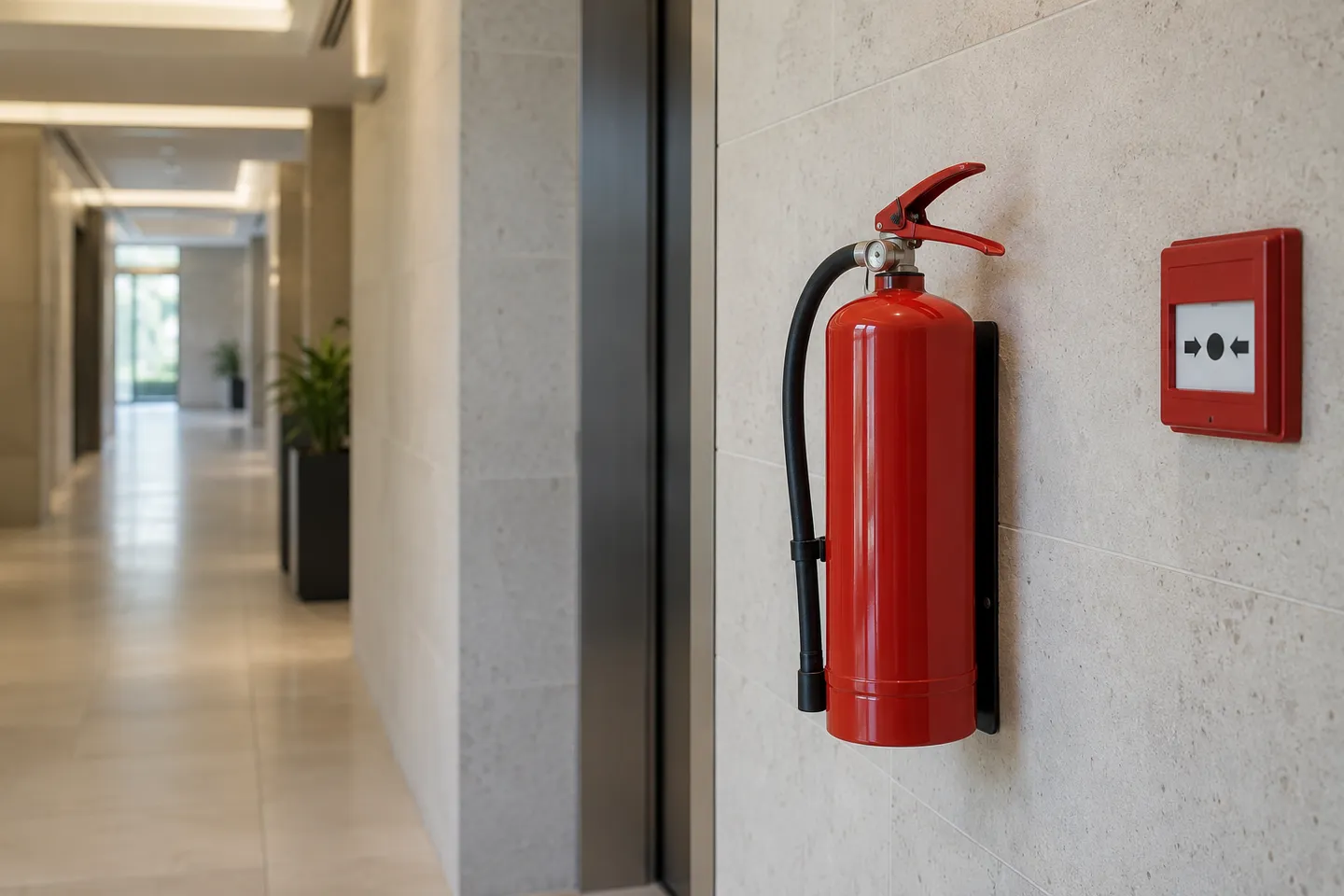
Choose the scope that fits the work
- Fire alarms: planned maintenance, an observed fault, replacement or changes associated with a refurbishment.
- Fire extinguishers: servicing existing equipment, replacement requirements or equipment needs following a change in premises use.
- Passive fire protection: fire doors, separation measures or concerns arising from building alterations.
For a combined project, identify each requirement separately. An alarm fault and a damaged fire door may affect the same area, but the work and records relevant to each are different.
Assessment findings and equipment work
An existing fire risk assessment may identify actions involving more than one service type. State which findings the proposed work needs to address and whether the scope has already been specified.
The government’s fire risk assessment guidance (gov.uk) treats assessment, resulting actions and reviews as distinct parts of managing fire risk. Equipment servicing should have its own defined scope alongside any assessment requirement.
Coordinate the project requirements
Refurbishment enquiries should describe the affected rooms or areas, changes in layout or use, and other work already arranged. For occupied premises, explain access restrictions and project timing. Mention relevant assessment, equipment and building records you hold.
Use the contact form to outline the service types involved, the work required and any project decisions still outstanding.